
Corals (and their kins)
Corals, hydroids, sea anemones and jellyfish all belong to the phylum Cnidaria. Jellyfish represent the free-swimming medusa form, while the others represent the sedentary polyp form. Some cnidarians have both polyp and medusa stages in their life cycle.
Corals are sometimes broken off a reef in storms and washed up. These are the skeletons made by colonies of coral polyps. A coral polyp is like a tiny sea anemone with a limy skeleton surrounding it. Colonies of polyps build up coral reefs with these skeletons. Reef-building corals require high light levels and warm water (over 18C) and have algae living symbiotically inside their tissues.
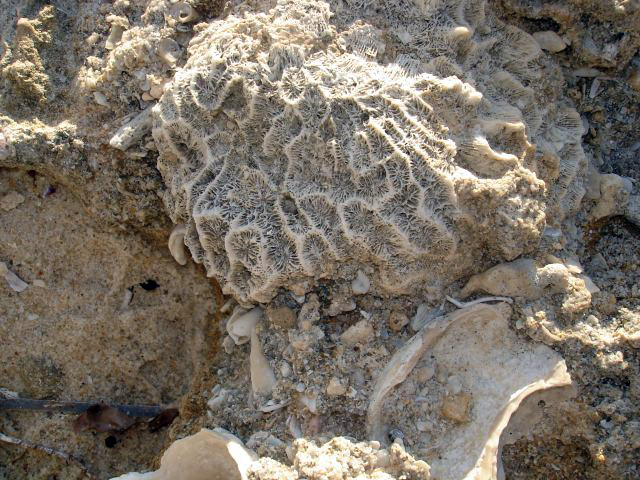
Common name
Fossil stony coral
Scientific name
Goniastrea (Cnidaria: Scleractinia)
Description
The patterns in this coral rock show where the living polyps were. This specimen is probably from the last interglacial period but the genus still exists today.
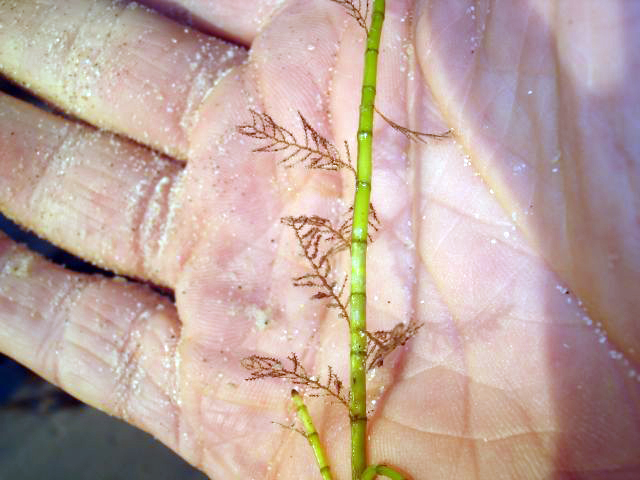
Common name
Hydroids
Scientific name
(Cnidaria: Hydrozoa: Hydroida)
Description
These delicate structures, often attached to seagrasses, are related to corals and jellyfish. They are colonies of tiny polyps attached to branched stems. Each polyp has a mouth surrounded by tentacles like a tiny sea anemone. Small planktonic animals are caught by stinging cells on the tentacles and eaten.